Thursday, June 20, 2013

Guachimontones located near Teuchitlan, Jalisco Mexico

Looking at Alter 
Lee and I had the true adventure not to long ago.  About 25 miles from our home in Tlajomulco is the remains of a Guachimontone.  At the base is a museum and restaurant.  Then about a 1/4mile hike up a steep driveway to the actual site of the ruins.  While you are up top, there is a sense of awe at the amount of work done using crude hand tools.  I also experienced a quietness that I only feel at places of great reverence.                            


Smaller of two ball fields
This particular site is home to the largest ball game court of its time.  The court was built at three separate times with the final size being measured at 111meters long.  The game consists of hitting the ball with ones hips until the opposite side was reached.  When a team stopped the ball, the other team received a point. This is different than other places in Mesoamerica that required the ball to go through a hoop.
I can only think of this as a  stricter form of soccer which allows for player to use any   part of the body except the hands.


Terraces
At the center of the site is built  a large circular mound atop which is the alter.  The alter has a hole which supports large poles. The ritual"Palo del volader" (flyer's pole) was performed by men as a tribute to the God of Wind.  Encircling the alter is a wide avenue and then a circle of rectangular mounds for buildings ,  There are several of these rings of  rectangular mounds.  The rectangular mounds were sites for religious buildings, public use buildings and private homes.  They were each fronted by a wide avenue used for the ritual dancing.  The site has 10 circular buildings, two ball courts, rectangular public squares, residential units and terraces used for cultivation.


The Walk up from the museum is very steep
(they do allow handicap/disabled people to drive up
but the car must return to the parking lot in 15min.)
The site is midway on the side of a long since dead volcano overlooking a huge valley and Presa de la Vega.  The lakeside still has remnants of ancient aqueducts built in the 1800's which supplied water to the surrounding towns.  Truly a valley and region proud of it's heritage.

Interesting to note is  it was the discovery by American archaeologist Phil Clayton Weigand of obsidian that lead to his curiosity of the area and eventually the Guachimontones. He also lead the way for a multi-language interactive museum which has been open and the zone known as the Teuchitlan zone was later set aside as a heritage site by UNESCO., thus saving it for generations to come and explore.

The town of Teuchitlan, Jalisco, Mx
.


terrace 
The lake valley


Lee is not taller than the mound
The signage is bi-lingual
Explanation of ball field


The amount of work it must
have taken is unthinkable


The Displays are interactive

She is happy to be going downhill

The Avenue

Remains of 1800's aqueduct on lake

You can't see the lake from the algae but it is there.

Sunday, May 19, 2013

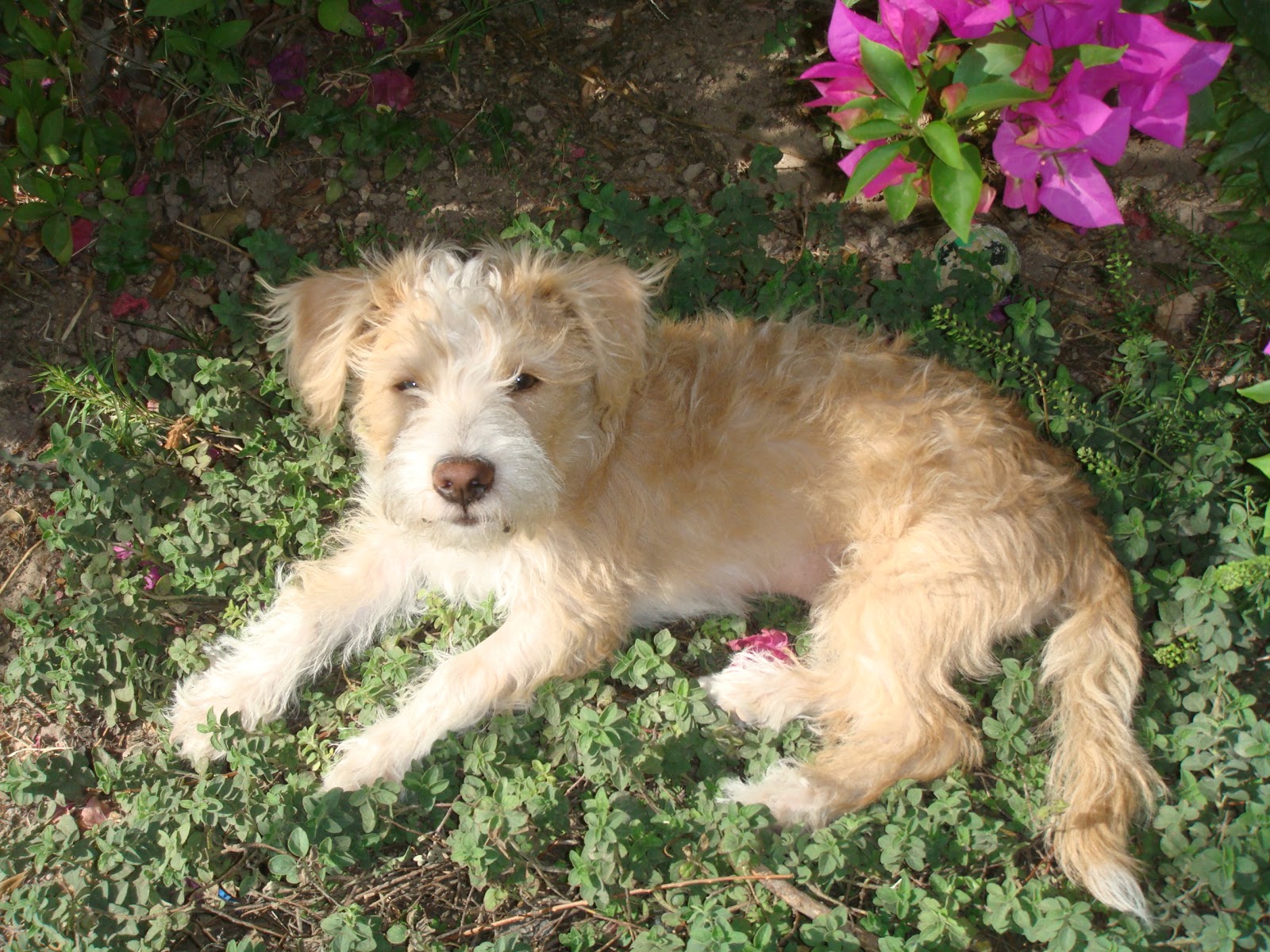
We are so very sorry for being extremely lazy/slow blogger.  I think about getting out of my comfy chair, turning off the television and writing events down.  But, then, I think about how hot it is (84deg) or how tired the dogs look and how I shouldn't disturb them. Oh yeah, we got a puppy for Sasha, his name is Bear (Oso for our Spanish speaking friends) He takes tons of time out of our day just laughing at his antics or the funny way his ears rotate like a satellite dish.
     Sasha has had a very rough time with seizures.  We thought at first it was distemper (one vets diagnosis) then it was encephalitis  and now finally with enough blood work in and ex rays taken, she has hemorrhagic encephalitis ( roughly put her digestive system is not working correctly and the food is turned into ammonia which the liver can not process)  Lee has looked up a diet that will help her and lessen the number and the severity of the seizures.   For a while it was every time we went for a walk Sasha ended up in trouble and I ended up a basket case.  Now instead of several a week, we are seeing once every maybe two weeks.
Stealing Sasha's sleep spot
Sasha not happy 


If I can't have my pillow and blanky,
I call this corner of the rug

We try to let them work out the napping arrangements

on their own, at night they each have a kennel to call
their own.  Lee says she is not a dog person, we three
disagree.  She is after all the one who brought them home
and talked me into keeping them.


Cuteness
Favorite bed is that of Oregano


Now why would they do this to me?
I call dibs on orange shoe pillow!


I can't reach the window so I will
     pretend here the wind is blowing
my face off from the back
of the front seats

   We had to go to Lake Chapalla for business one day and decided it was time for a family road trip.  After losing his breakfast, lunch and dinner all over the back of the Jeep, Bear decided he likes car rides.  He can't wait until he is big enough for a window seat.
  The lake was down about 30%.  Lee and I took the dog's out onto the dry lake bed, not
thinking of the possibilities of shoe shucking mud.  Lee and I both walked out of our shoes and Sasha was up to her belly in a mud bog.  We both know how lucky we were, and no we did not see a sign until after we were leaving the lake bed (not that I understood it any way)

Road Trip!


Searching for water

Risk Zone MUD!
 It is fun to be able to explore
with our little family in Mexico.
Not everywhere lets the dogs in,
but when we can they come with
us.

It must be a sturdy wall
to hold up that tree.
Lee has also set up a shop across the street.  There are usually half a dozen kids over there working on projects Lee makes up for them or playing games.  The parents are loving the fact that Lee is taking so much interest in their children and helping them to learn english and wood skills.    She also made a young friend, Kevin, his own rocking horse.  This act of kindness has earned her hugs and smiles for life!


Monday, November 12, 2012

Day of the Dead

Here in Jalisco the Day of the Dead is Celebrated on November 1 and November 2.  Add Halloween night in the mix and by looking at the store shelves, one would think the Mexican cultural relishes ghoulish ghostly happenings .  The truth is the Day of the Dead is not what most Americans think.

From what I have learned the day of the dead is to literally throw a welcome home party to make their loved ones feel comfortable in their new existence.  Grave sites are cleaned, food and flowers brought in.  And the living family spends a day or two celebrating live and death at the cemetery.  Mariachi bands play, here in Tlajomulco there was a parade from the church to the main in town cemetery. There was a small market area set up outside of the cemetery gates, selling everything from turnips to scary masks and gorgeous bouquets of flowers.

I tried to be discrete with my camera, not understanding that this was a happy party as opposed to the day of mourning that surrounds most when they visit the grave-sites of their dearly departed.  These are just random shots of my first day of the dead.


Mask for sale at the market


Two kids watching the crowds from their patio

Pan (sweet breads)
The traditional celebration of Dia de los Muertos started over 3,500 ago by the Aztecs who practiced a month long celebration that honored those who had died and
welcomed their spirits back to earth for a visit.

fresh coco water


Just inside the cemetery walls,  cotton-candy 
she waits patiently in the shade  for customers

Headstone

flowers 

the band is warming up for the party
this is a house for the dead

a family's headstone


large poinsettia bushes
Flowers are also symbolically important part of day of the dead. Many face-painting designs of skulls incorporate flowers, and this symbol has a meaning of its own. The flower most associated with Dia de los Muertos in Mexico is the marigold, or CempazĂșchitl which is known as the flower of the dead. In Aztec belief the marigold was sacred to Mictlantecuhtli, their god of the dead. According to Mexican belief, the souls of departed family and friends return to earth on the day of the dead, and it is believed the strong scent of marigold helps to guide them back.


cleaning out the casa


every spec must be cleaned out


welcome to the cemetery, be sure to pay your upkeep fees.
Toys are brought for dead children (los angelitos, or "the little angels"), and bottles of tequila, mezcal or pulque or jars of atole for adults. Families will also offer trinkets or the deceased favorite candies on the grave. Ofrendas are also put in homes, usually with foods such as candied pumpkin, pan de muerto ("bread of dead"), and sugar skulls and beverages such as atole. The ofrendas are left out in the homes as a welcoming gesture for the deceased


some sites are simple tombs and others look like homes

Jesus is important.  


. Some people believe the spirits of the dead eat the "spiritual essence" of the ofrendas food, so though the celebrators eat the food after the festivities, they believe it lacks nutritional value. Pillows and blankets are left out so the deceased can rest after their long journey. In some parts of Mexico, people spend all night beside the graves of their relatives. In many places, people have picnics at the grave site, as well.
cool candle holders

street market

undressed
dressed
look at how big those turnips are!
cool candy
flowers and sweet bread
who needs a reason to play dress up? shopping is reason enough